Effective corporate climate action begins with understanding where emissions originate and how they can be reduced. For this purpose, the world’s most widely used greenhouse gas accounting standard, the GHG Protocol, divides emissions into three categories:
Scope 1: Direct emissions from owned or controlled sources
Scope 2: Indirect emissions from purchased energy
Scope 3: Indirect emissions across the value chain
A company’s full carbon footprint consists of Scope 1, Scope 2 and Scope 3 emissions. In this article, we focus on Scope 1 emissions, which form the basis of an organization’s climate impact and often provide the most concrete starting point for reduction actions.
What Are Scope 1 Emissions?
Scope 1 emissions cover direct greenhouse gas emissions from sources that a company owns or controls. According to the GHG Protocol, these sources fall into four main categories:
- Stationary combustion (fuel use in boilers, furnaces, generators)
- Mobile combustion (fuel use in company vehicles and machinery)
- Process emissions
- Fugitive emissions
The relevant emission sources vary by company and industry. The first step in Scope 1 calculation is identifying the operations and processes that generate direct emissions.
1. On-site Energy Production – A Key Source of Direct Emissions
Scope 1 emissions arise when a company generates energy itself. All on-site fuel combustion is included in the calculation, even if part of the produced energy is sold outside the organization.
Common emission sources include:
- Boilers
- Generators
- Backup power units
- Oil, gas, pellet or woodchip heating systems
What about renewable energy?
- Wind and solar power do not generate Scope 1 emissions.
- Biogenic CO₂ emissions from burning biomass must be reported separately as biogenic emissions, even though they are not counted as fossil Scope 1 emissions.
- However, methane (CH₄) and nitrous oxide (N₂O) emissions from biofuel combustion must be included in Scope 1 totals under the GHG Protocol.
Example:
A factory uses a natural gas boiler to heat the production hall. All combustion-related emissions are reported as Scope 1 emissions.
2. Company Vehicles and Fuel Use in Machinery
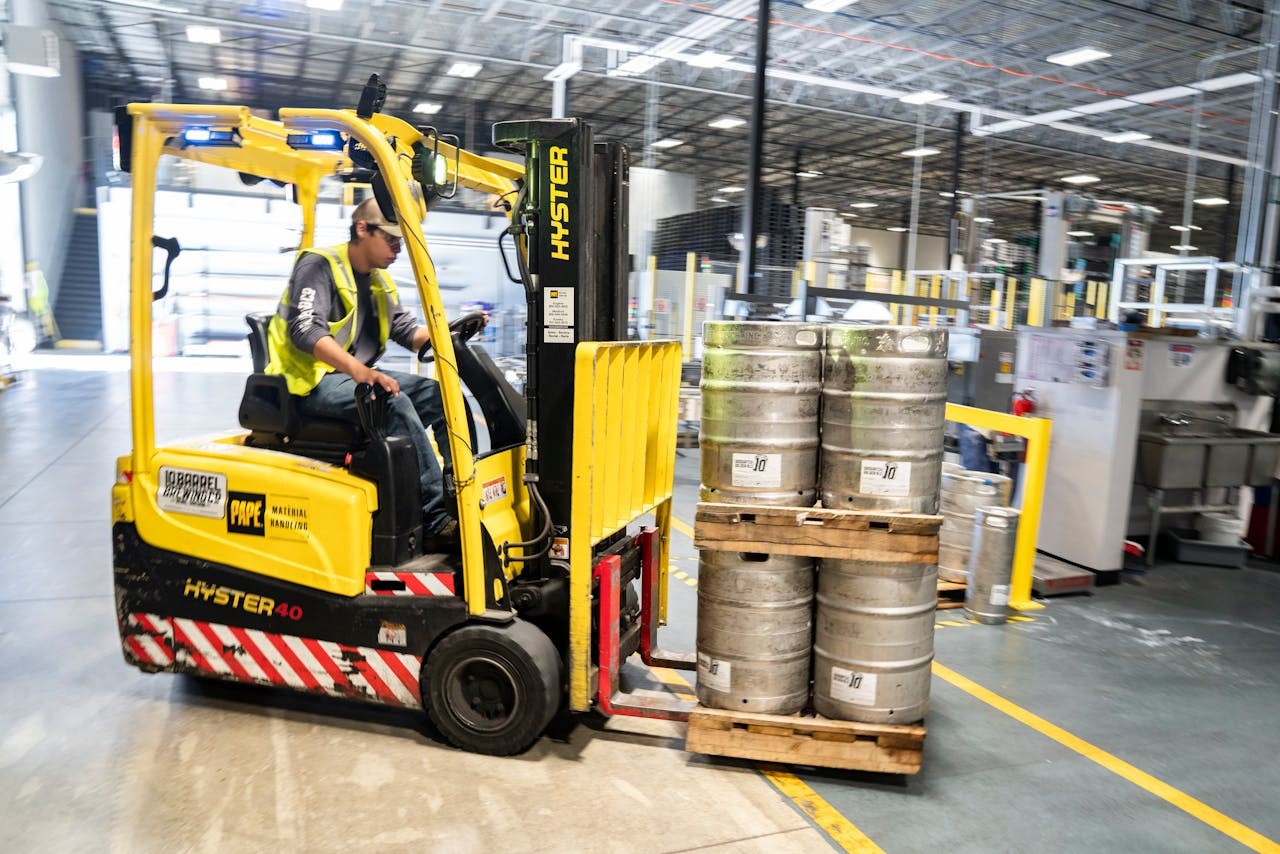
Scope 1 includes emissions from fuel consumed by vehicles and machinery that the company owns or controls. Under the operational control principle, leased vehicles used in operations are also included.
Typical sources are:
- Cars and vans
- Trucks and lorries
- Forklifts and industrial machinery
Example:
A logistics company reports all emissions from its own truck fleet under Scope 1.
What about employees’ personal vehicles?
If employees use their own cars for business travel, those emissions may be included in Scope 1 when the vehicle is used directly for the company’s operational activities. Clear boundaries and consistent practices are recommended.
3. Process Emissions – Not Reduced by Energy Efficiency Alone
Process emissions are released during physical or chemical reactions in industrial production. They often represent significant and unavoidable emissions in manufacturing sectors.
Examples include:
- CO₂ released during cement production
- PFC emissions from aluminium production
- Greenhouse gases from chemical manufacturing
- Methane from anaerobic digestion (e.g., biogas plants)
These emissions require process-level solutions, not just energy efficiency improvements.
4. Fugitive Emissions – Frequently Hidden but Highly Relevant
Fugitive emissions arise from intentional or unintentional release of greenhouse gases.
Common examples are:
- Refrigerant leaks (e.g., R410A, R134a)
- Leaks in compressed air or gas systems
- Methane leakage in gas distribution networks
- Emissions from valves and pipe connections
Example:
Refrigerant leaks in food industry cooling systems are often a major Scope 1 emission source due to the extremely high GWP values of many refrigerants. Cold storage and refrigerated transport face similar challenges.
Why Reducing Scope 1 Emissions Matters
Scope 1 emissions are often the only emissions category fully under a company’s direct control. This makes them a critical target for impactful and immediate climate actions.
By understanding its fuel use and process emissions, a company can:
- Improve energy efficiency
- Optimize vehicle fleets
- Reduce refrigerant leaks
- Modernize equipment and heating systems
Some actions provide immediate cost savings, while others—such as replacing legacy heating systems—generate long-term benefits.
Tofuture Supports High-Quality Scope 1 Emissions Accounting
Accurate Scope 1 accounting must provide a realistic picture of a company’s operations and emission sources. For some businesses, Scope 1 emissions are minimal and easy to calculate. For others—especially in manufacturing—the assessment of fuel use, heating systems, internal energy flows, process emissions and machinery is a more comprehensive task.
The Tofuture team supports organizations throughout the process—from scoping and boundary-setting to calculating emissions transparently and reliably.
The Tofuture CSM carbon accounting system enables precise modelling of direct emission sources and supports:
- Scope 1 reductions and climate action planning
- CSRD/ESRS E1 climate reporting
- SBTi target-setting and tracking
If you want to strengthen your climate strategy and ensure accurate Scope 1 reporting, get in touch. We’re happy to discuss your goals and concrete implementation of carbon footprint accounting.